
How to Check Criminal History in Richmond
Start with the event, not a broad name search. Richmond Police records cover reports made or arrests carried out by the Richmond department. Richmond Municipal Court records cover city ordinance and traffic matters filed in that division. State charges filed in Ray County belong in the circuit-court docket. A booking sheet belongs to the jail that accepted the person, and Missouri’s repository supplies a compiled statewide open-record history.
Gather the full name, exact birth date, spelling variants, incident date, location, ticket or case number, and report number when known. Then use this Richmond record-check order:
- Identify whether Richmond Police, the Ray County Sheriff, MSHP, or another agency created the report.
- Send a precise Sunshine request for a Richmond-created police record through the Richmond City Clerk.
- Search Case.net for a Richmond municipal docket or Ray County state case, then compare the case number, court, filing date, and charge.
- Ask Richmond Police where an arrested person was booked, then confirm custody or a booking sheet with that jail.
- Use MACHS only when the question calls for Missouri open criminal history rather than one Richmond report or case file.
Each step answers a different question. A Richmond report may have no arrest. An arrest may not lead to a filed case. A case may end in dismissal, amendment, a plea, trial, or another result that only the court docket can show.
Richmond City and County Records
Richmond is the Ray County seat, but location does not merge Richmond and county custody. Richmond City Hall and the Ray County Courthouse serve different record roles within the same community. Richmond Police reports remain Richmond records. The Richmond City Clerk receives Sunshine requests. The Ray County Criminal Circuit Clerk maintains filed county criminal cases, while the sheriff or receiving jail maintains county booking and custody records.
This distinction prevents a common delay. A request sent to the county for a Richmond Police incident may reach an office that never created the report. A request sent to Richmond for a circuit judgment has the same flaw. Ask which agency wrote the report, which prosecutor filed the charge, which court heard it, and which facility booked the person.
The official Richmond city page is the current source for city offices and local government notices.
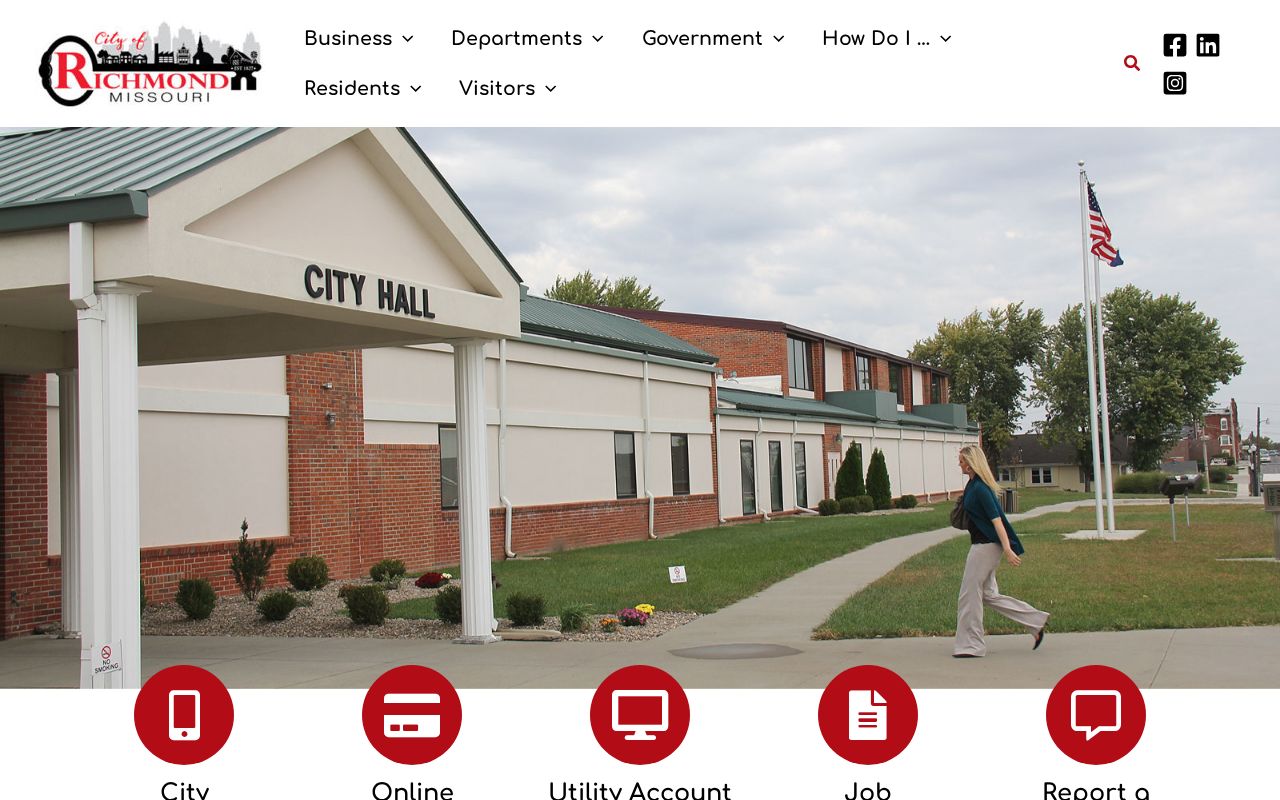
The Richmond source anchors local requests at city altitude, even though a later state charge or county detention can create a separate record elsewhere.
Note: Richmond became the permanent Ray County seat in 1827, but city custody and county custody remain legally distinct.
The Richmond Police Department
Richmond Police creates incident reports, arrest reports, dispatch-related records, and other law-enforcement files for events within its authority. The official department page directs Missouri Sunshine requests through the Richmond City Clerk. No separate police-report portal, detailed request form, online arrest blotter, or official department app was verified. Use Richmond’s published route rather than a lookalike service.
A clear Richmond request should identify the requester’s contact details, incident number if known, date and time range, location, record type, and preferred delivery format. Name only the subject details needed to find the file. An incident report, arrest report, dispatch entry, booking record, and body-camera segment are separate items. Ask for a fee estimate because Richmond does not publish a local police-copy schedule in the research materials.
The official Richmond Police Department page confirms the city’s Sunshine-request direction.
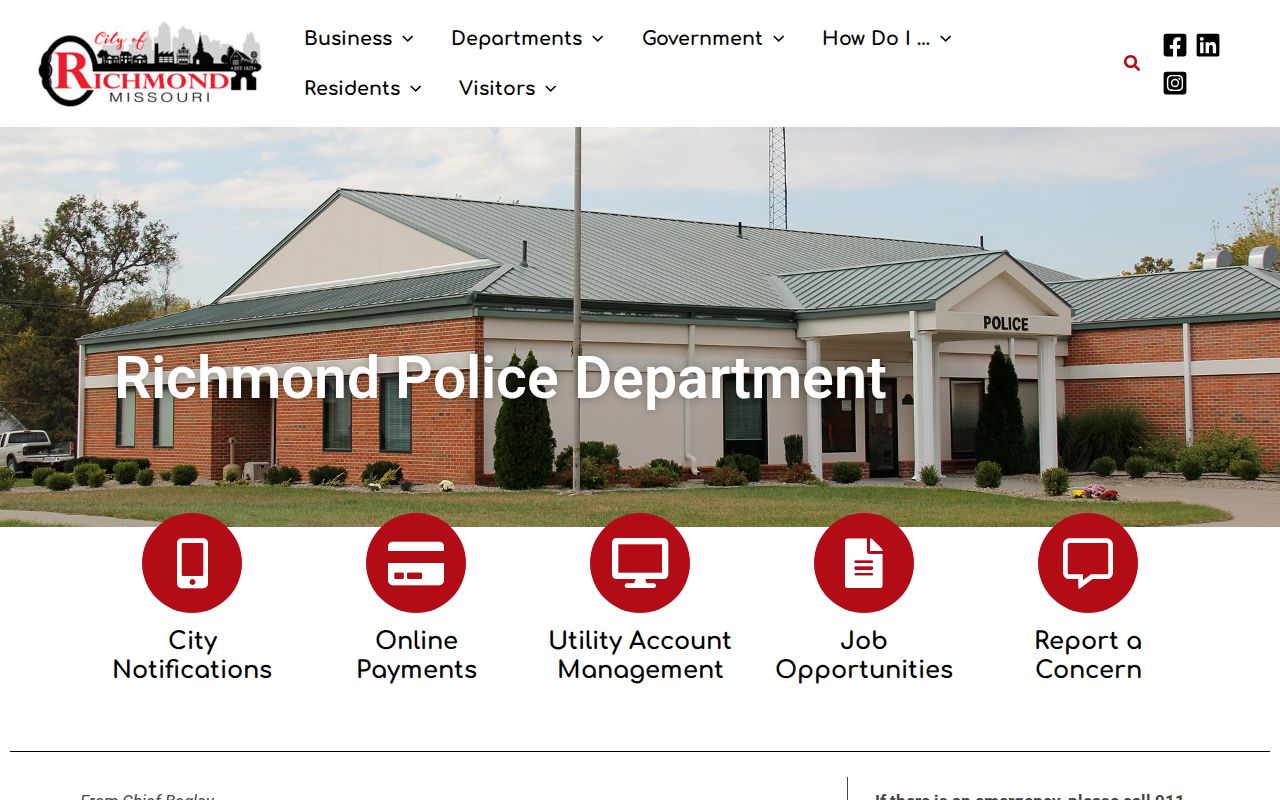
The department page provides the authenticated route for Richmond police records and should be checked for current Richmond contact details before submission.
Richmond Police Records Start With Clerk
The Richmond City Clerk is the intake point for a Richmond Sunshine request, not a universal custodian for every record tied to a local event. Describe the exact Richmond Police file and give a useful date range. If Richmond needs more detail to locate the material, a narrow request makes that exchange faster. Ask for electronic delivery or inspection if that format meets the need, and request an estimate before copies or research are produced.
Missouri law allows a custodian to redact protected material rather than disclose every field. Victim and juvenile identifiers, medical information, active-investigation facts, security methods, personal identifiers, and confidential communications may be withheld under the governing rule. A request for a discrete report is more useful than asking for “all criminal history” on a person because Richmond Police does not hold the statewide repository product.
| Richmond record | Starting office | Useful request detail |
|---|---|---|
| Incident or arrest report | Richmond City Clerk for Police records | Incident number, date, place, record type |
| Municipal ticket file | Richmond Municipal Court | Ticket or case number, name, hearing date |
| State criminal case | Ray County Criminal Circuit Clerk | Case number, party name, filing year |
| Booking or current custody | Receiving jail or sheriff | Name, arrest date, booking context |
Note: A Richmond police request cannot supply a certified court disposition, and a court docket is not the police narrative.
Arrests and Bookings in Richmond
A Richmond arrest can create four distinct records. The officer writes the incident and arrest report. A receiving jail creates the booking sheet, fingerprints, photograph, custody status, bond, and release or transfer entries. Reportable fingerprints and charges create a Missouri Central Repository arrest cycle. If the prosecutor files, the clerk opens a court case. The labels can differ because each stage has a different purpose.
No verified Richmond city jail roster or holding-facility page was located. Ask Richmond Police where the person was transported. If Ray County received the person, call the sheriff at 816-290-5323 for current custody and use the county Sunshine channel for a releasable booking record. Search Case.net after filing, but allow for the fact that a new arrest may not yet have a public case.
Recent arrest details should be confirmed through official custodians. Richmond has no verified public arrest blotter or mugshot gallery. The broader Ray County arrest history channels explain how the sheriff, court clerk, state repository, and state corrections search answer different stages.
Richmond Arrest to County Booking
Richmond Police custody does not prove where booking occurred. An officer may document probable cause and transport the person to a receiving facility. Booking staff then verify identity and legal authority, inventory property, conduct medical and security screening, capture fingerprints and a photograph, enter warrants or holds, and record bond or release status. Private medical and classification details are not ordinary public fields.
If the court shows no case yet, keep the stages separate. First, ask Richmond Police for the report and transport destination. Next, ask the receiving custodian about booking or release. Search Case.net later for prosecutor-filed charges. MACHS can show an arrest under 30 days as open history, but an older uncharged arrest generally closes under Missouri’s published framework. A name-based MACHS result remains a possible match.
Local custody path: Richmond Police arrest › receiving jail booking › prosecutor review › Ray County or Richmond court filing.
That sequence explains why the arrest charge, booking label, filed count, and final disposition may not match word for word.
Richmond Municipal Court Records
Richmond Municipal Court is a division of Missouri’s Eighth Judicial Circuit. It has original jurisdiction over Richmond ordinance violations under Chapter 479. The city explains that a ticket is a courtesy summons rather than an arrest. Municipal traffic and ordinance matters therefore begin as city cases, not as Ray County felony prosecutions.
Search the public docket through Missouri Case.net and contact the municipal clerk for documents or certified copies that are not available online. Verify live city payment and fine information rather than relying on a general Missouri amount. The research did not identify a current Richmond municipal copy fee, so ask the clerk for the price and accepted method.
| Court Name | Richmond Municipal Division of Missouri’s Eighth Judicial Circuit. |
|---|---|
| Case Types Heard | Richmond ordinance and municipal traffic matters filed in the city division. |
| Case Lookup Channel | Case.net for the public docket; Richmond municipal clerk for files and certified copies not online. |
| What the Docket Shows | Case number, filing date, parties, charge or ordinance entry, events, status, disposition, and public documents when enabled. |
| Copies & Fees | Current local prices were not published in the research; request a quote from the municipal clerk. |
The official Richmond Municipal Court page explains the division’s city jurisdiction and ticket procedure.
The city court source is the place to recheck current Richmond procedures before acting on a ticket, summons, payment, or records request.
Richmond Courtesy Summons Records
Richmond’s ticket procedure can trip up a person who treats every municipal citation as an arrest record. Richmond calls the ticket a courtesy summons. It directs the person to handle the case through the municipal process. If the person fails to appear or otherwise dispose of the ticket, the court mails a summons with a new date to the address written on the ticket.
Keeping that address current matters. A missed date can lead to later court action, and a public docket may show an event without supplying every mailed document. Use Case.net to identify the case and then contact the Richmond municipal clerk for the live status, the next required step, and a copy of any public order or notice. Do not infer a conviction from the fact that the ticket or case exists.
Note: A Richmond ordinance ticket is a city court matter unless a separate state charge or warrant places another case in county court.
Where Richmond Records End Up
A Richmond Police report stays with the city, but later events can create records in other systems. If a prosecutor files a state charge, the Ray County clerk opens a circuit or associate-division file. A Richmond ordinance filing goes to the municipal division. Fingerprint-supported, reportable arrest data moves to the Missouri Central Repository under an eight-digit Offense Cycle Number. Courts and corrections later report dispositions and supervision events.
Record flow: Richmond Police Department › Ray County Courts › Missouri State Highway Patrol CJIS, Missouri Central Repository
Use the city report for what the officer recorded, the booking sheet for custody, the court file for filed charges and outcome, and MACHS for statewide open criminal history. These records may update at different times. A careful Richmond search compares identifiers and confirms an unclear entry with the office that created it.
Richmond Ordinance Records in Case.net
Case.net can be searched by litigant name or case number. A surname begins the name route, while first name, middle name, filing date or year, court location, and case type help narrow a common result. For Richmond municipal records, choose the matching municipal division when offered. For state charges, use Ray County or the Eighth Judicial Circuit and verify the displayed court.
| Case.net field | Use in a Richmond search | Format note |
|---|---|---|
| Last Name | Starts the litigant route | Spelling matters |
| First and Middle Name | Narrows similar names | Middle name may be an initial |
| Case Number | Targets one known file | Use the court’s displayed format |
| Filing Date or Year | Limits older results | Not always the incident date |
| Court or Location | Separates municipal and county files | Select the Richmond or Ray location |
| Case Type | Focuses ordinance or criminal results | Use the available live options |
Read the docket in sequence. The public case can show the filing date, case type, charge or ordinance description, scheduled events, attorneys where public, docket entries, disposition, judgment, financial entries, and document links. “ECASE” means the file is electronic, not that each document is public online. A confidential item or document outside File Viewer requires a clerk inquiry.
Missouri Case.net is free for basic public docket searching and does not require a paid subscription. A certified result still comes from the responsible clerk.
Public Access Rules
Richmond Police access follows Missouri’s Sunshine Law and the statutes that govern arrest and criminal-history records. Public does not mean every field must be posted online or released without redaction. The Richmond custodian may permit inspection, charge lawful copy or research costs, and remove protected facts. Court records from Richmond follow judiciary access rules in addition to public-record principles.
Key Statutes:
RSMo §610.100 controls when Missouri arrest and incident records are open or closed.
RSMo §610.120 explains the effect of closed records and continued authorized access.
RSMo §610.150 places special limits on public access to 911 telephone reports.
RSMo §43.503 requires qualifying criminal-justice events to be reported to the Missouri Central Repository.
Juvenile information, victims’ identities, medical facts, Social Security numbers, active-case material, and security details can be confidential or redacted. If only part of a Richmond record is exempt, ask for the nonexempt portion and the specific legal basis for any denial. Court records should go to the municipal or criminal clerk, not through a police-report request.
Richmond Records Since the County Seat
Richmond became Ray County’s permanent seat on September 24, 1827. Modern records now divide among city, county, court, and state systems even though the courthouse remains in Richmond. That history helps explain the compact local geography but does not erase agency lines. A Richmond City Hall record and a Ray County Courthouse record can concern the same person while documenting different acts.
Statistics need the same care. Richmond had 5,652 residents in the 2020 census, as reflected in the official place tables available through data.census.gov, but an agency crime count must state its agency, year, and measure. A Richmond Police total does not equal all crime in Ray County. The FBI Uniform Crime Reporting program explains why agency reporting and offense measures require context. No current official Richmond crime table was included in the source set, so unsupported rankings or rates should not guide a record search.
The practical rule has stayed simple. Identify the record, confirm the year and agency, and use the current official custodian. The broader Ray County criminal history overview supplies county and state depth when the Richmond trail leaves city control.
Note: Richmond crime counts must identify the reporting agency, year, and measure before comparison with Ray County data.